Plan projects around available capacity.
Map upcoming work against people, resources, calendars and existing commitments before the project begins.




Build a practical path to delivery.
See upcoming demand across all projects and spot staffing or resource gaps early.

See total demand
Review upcoming work across projects, departments, locations and skills.

Start with generic roles
Use named or placeholder staff while roles and requirements take shape.

Spot capacity gaps
Find over-allocation, missing skills and constrained resources early.

Address future gaps
Turn future demand into practical hiring, staffing and resource plans.
Know who is busy, available or over-allocated.
Bring every active and upcoming project into one planning view.
Interactive utilization views reveal pressure across staff, departments, locations and skills. Changes to projects and allocations update the workload immediately.
- Include working hours, leave and holidays from connected HR systems
- Review demand by department, location or skill
- Identify where project plans exceed capacity
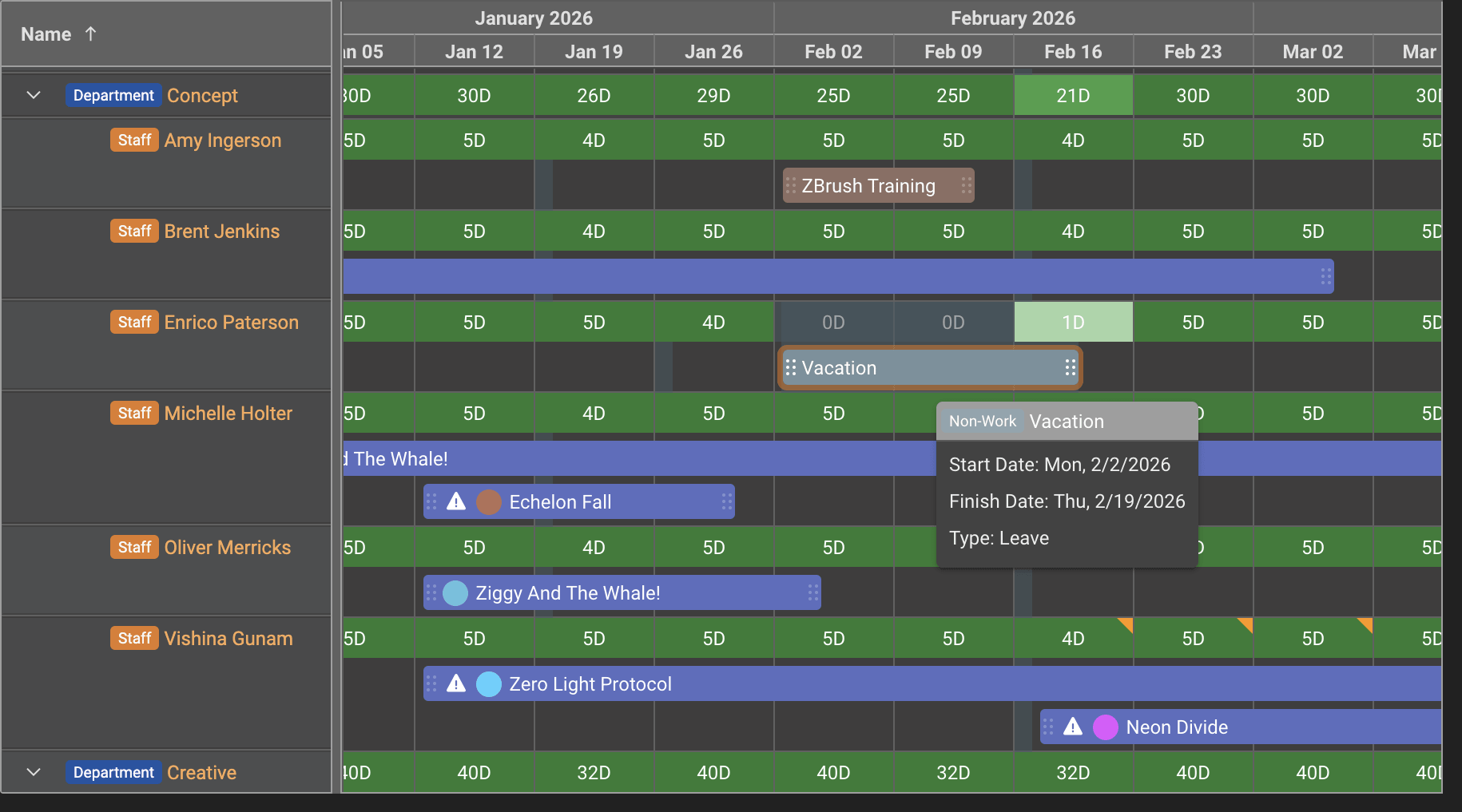
View project demand and availability across your staff pool.
Start with placeholder roles. Assign people when ready.
Build the plan before every person is confirmed.

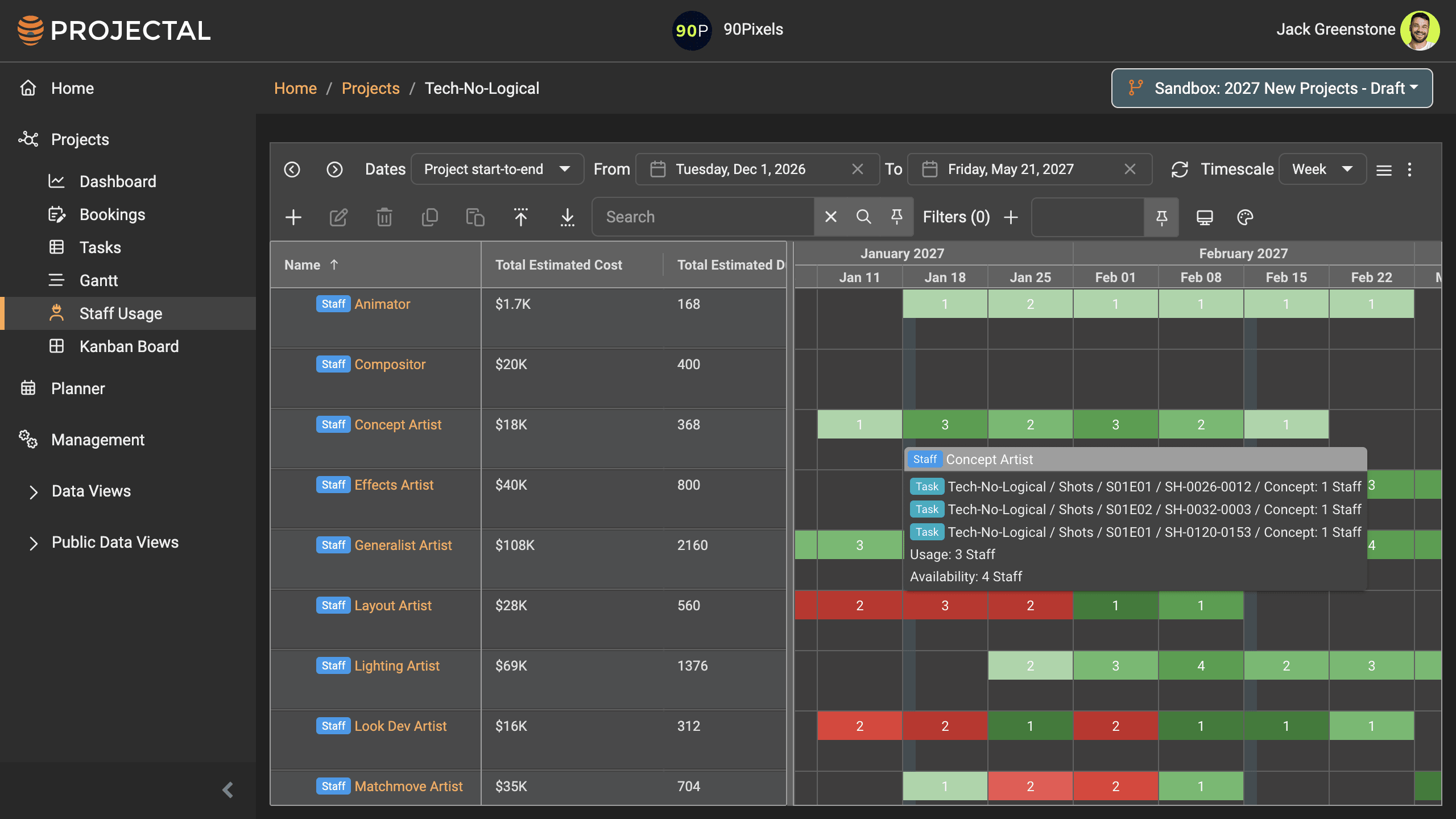
Define staffing requirements with placeholder roles.
Use placeholder roles while requirements are still taking shape. Then assign suitable people based on skills and availability.
-
Define placeholder roles
Use generic staff to define the costs, roles, skills, seniority and timing the project requires..
-
Check staff availability
Review skills, HR calendar information, leave and existing project commitments.
-
Assign named staff
Assign suitable people without rebuilding the project plan.
Plan for people, equipment and other limited resources.

Manage resources
Plan equipment, facilities, software and other project resources.

Hiring visibility
Export staffing requirements and show when additional capacity is needed.

Changing project dates
See the staffing effect when project dates or task durations move.
Turn project demand into a practical delivery plan.
Bring skills, availability, calendars and resources together before production begins.

